
Five Creative Ways to Gamify Learning at Home with Fun Science Experiments and STEM Activities

Updated: May 6
Learning at Home: Five Fun Ways to Gamify STEM Education
Learning at home can sometimes feel like a challenge, especially when trying to keep kids engaged and excited. But what if learning could be a game? What if science and STEM activities could turn into fun adventures that spark curiosity and creativity? Today, I want to share five creative ways to gamify learning at home using simple, hands-on science experiments and STEM projects. These ideas are perfect for making education playful and memorable.
If you want even more inspiration, check out Hello Edu on Instagram for a treasure trove of STEM activities you can try at home. They have fantastic ideas like using a balloon and string to demonstrate Newton’s Third Law or creating colorful chemical reactions with everyday kitchen materials.

Balloon and string experiment showing Newton's Third Law in action
Turn Science into a Challenge with Balloon Rocket Races
One of my favorite ways to gamify learning at home is by turning simple science concepts into friendly competitions. For example, you can create balloon rockets to explore Newton’s Third Law of Motion. This law says that for every action, there is an equal and opposite reaction.
Here’s how to set it up:
Thread a long piece of string through a straw.
Tie the string tightly between two chairs or door handles.
Inflate a balloon but don’t tie it; instead, tape it to the straw.
Let go of the balloon and watch it zoom along the string.
To make it a game, time how fast each balloon rocket travels or see whose balloon can go the farthest. You can even experiment with different balloon sizes or shapes to see how they affect speed.
This activity is a great way to combine physics with play. Plus, it uses simple materials you probably already have at home.
Explore Chemical Reactions with Kitchen Science
Science doesn’t have to be complicated or expensive. Many exciting chemical reactions happen right in your kitchen! One fun experiment is the classic baking soda and vinegar reaction. It’s a fantastic way to introduce kids to acids, bases, and gas production.
To gamify this, you can create a “volcano eruption” contest:
Build small volcano shapes using clay or playdough around a cup.
Add baking soda inside the cup.
Pour vinegar mixed with food coloring into the cup and watch the eruption.
Challenge your kids to create the most colorful or longest-lasting eruption. You can also try adding dish soap to make the reaction foamier.
This experiment encourages creativity and scientific thinking while being a blast to watch.

Colorful baking soda and vinegar volcano eruption experiment
Build Simple Machines with Everyday Items
Building simple machines is a fantastic way to bring engineering concepts to life. You can create levers, pulleys, and inclined planes using household items like rulers, spools, and string.
Try this pulley challenge:
Set up a pulley system using a spool and string.
Attach a small bucket or container to one end.
Fill the bucket with different weights (like small toys or coins).
See how much weight your pulley can lift and how it changes with different setups.
Turn it into a game by timing how fast your child can lift the weight or by guessing how many coins it will take to lift a certain object.
This hands-on activity helps kids understand mechanical advantage and problem-solving in a fun way.
Create Story-Based STEM Challenges
Storytelling is a powerful way to engage kids. You can create STEM challenges based on stories or themes that your child loves. For example, if your child enjoys space adventures, you can design a challenge to build a model rocket or a Mars rover using craft supplies.
Set goals and rewards to make it feel like a game:
Build a rocket that can hold a small weight.
Design a rover that can move across a rough surface.
Solve puzzles related to space travel.
This approach combines creativity, problem-solving, and STEM skills. It also makes learning feel like an exciting quest rather than a chore.
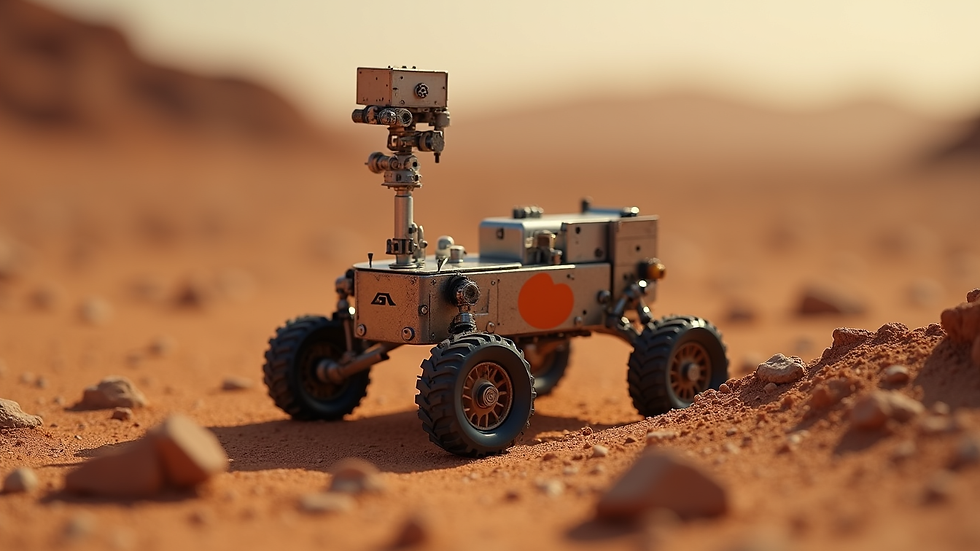
Homemade Mars rover model built from craft supplies
The Importance of Gamifying Learning
Gamifying learning at home doesn’t require fancy tools or complicated setups. With simple science experiments like balloon rockets and baking soda volcanoes, hands-on STEM challenges, and creative storytelling, you can turn education into a fun game that kids look forward to.
If you want to explore more ideas and see how to gamify learning at home, visit Hello Edu on Instagram. They offer tons of creative STEM activities that make learning exciting and accessible.
Remember, the goal is to make learning playful and interactive. When kids enjoy the process, they absorb more and build a lifelong love for science and discovery. So grab some balloons, kitchen supplies, or a STEM kit, and start your learning adventure today!
Additional Activities to Consider
Nature Scavenger Hunt
Take learning outdoors! Create a nature scavenger hunt where kids can explore their surroundings. Make a list of items to find, like specific leaves, rocks, or insects. This activity encourages observation and appreciation for nature.
DIY Science Fair
Host a mini science fair at home! Let your kids choose a science project they’re passionate about. They can present their findings to the family, fostering public speaking skills and confidence.
Math Games with Everyday Objects
Use everyday items for math games. For example, use pasta for counting, sorting, or simple addition and subtraction problems. This hands-on approach makes math tangible and fun.
Art Meets Science
Combine art and science by creating art projects that involve scientific principles. For example, make tie-dye shirts using chemical reactions with fabric dye. This blends creativity with learning.
Virtual STEM Challenges
Explore online resources for virtual STEM challenges. Many organizations offer free activities that can be done at home, providing additional structure and inspiration.
By incorporating these activities, you can create a rich learning environment that nurtures curiosity and creativity. Each activity can be tailored to your child's interests, ensuring they remain engaged and excited about learning.



Comments